Wednesday, February 13, 2008

Tucson Shows

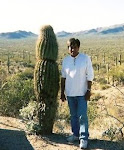
Feb.1st: I arrived in Tucson at noon via Alaska Airlines... it was already 64 degrees F. Just the day before in Juneau, the temperature was 3 degrees. In Tucson, the sun was shining and the Saguaro catuses was there to greet me at the airport. I flagged down a shuttle to take me to the InnSuites... today was setup day at the Arizona Mineral & Fossil Show.
Feb.2nd: The InnSuites is one of four venues of the AZ Mineral & Fossil Show... which is one of the forty shows in Tucson. It was great meeting so many old friends and familier faces and seeing so many new vendors. My friend Terry Williams was set up at the Ballroom where there was about twenty

vendors. I was set up with the leisure class along side the swimming pool. I was happy to have an umbrella to provide shade from the sun... I didn't need to get any darker. It is so much fun to be in Tucson during the gem shows... there is alot of excitement in the air. The Tucson folks who lived here complained about how cold it was... I smiled and thought... 'those mere mortals would die a frozen death back home in Juneau.' I don't even consider it cold until water is in the solid state... then there are many levels of frozen. Some lady at the InnSuites remarked that the freezing point of water in Tucson was 68 degrees. Driving around Tucson is quite the adventure... Tucson drivers are the worst (fastest) I have ever seen... and I thought the Juneau drivers were bad. My friend John once told me that to Tucsonians... the green light means drive fast, the yellow light means drive even faster... and the red light means proceed with caution. During the gem shows there is pedestrian or bicyclist who is hit & killed everyday. Tucson is really flat and spread out and there are now one million people who live here now... and rush hour to me... is combat driving. To drive well here is to throw caution out the window and drive boldly at ten mph over the speed limit. I started to carve polar bears and sea lions for my demonstration table at the InnSuites. My sculptures were quite small compared to other sculptors who were there at the venue. Each of us were good in the different aspects of sculpture. But my work was quite interesting for people... because I could complete a sculpture while they were watching. During the week the temperatures reached the mid seventies and the sun feels great.
Feb14th: I set in the arena of the Tucson Convention Center... where the 54th annual Tucson Gem & Mineral Society Show is held. There was about 250 vendors at the 'big retail show' or 'TGMS' as other vendors call it... the best of the best are here at this show. This years theme is 'minerals of the U.S.' I went to bed early in order to be well rested on opening day. It was nice and busy. I sold a few sculptures in the morning and it slowed down a bit, so I walked around to see the vendors. The array of minerals, fossils, and jewelery was quite amazing. It was so hard not to spend money... since I was here to make some. The second day was very busy, all the vendors were to be there at 9am, one hour earlier... because of the Tucson school kids were to visit. There were supposed to be about a thousand of them that morning... but by 11am, it didn't seem too bad to me... but then the main group of the student body arrived in the arena... there was thousands of them and they all watched me carve soapstone. It awas alot of fun but they sure took up my personal space. Some kids was an inch from my face. I had to keep an eye out for my tools and sculptures or they would be grabbed and possibly dropped. Overall it was fun. The kids were respectful and asked me some good questions. The all wanted to try carving stone, but I wasn't set up to teach a class of a hundred kids.


My friend Regan whom I had met last year at the TGMS was here again to help me sand my sculptures. Her mother Wendy is here to sell trade magazines here at the shows. Last year I taught Regan and her brother Grayson the basics of soapstone carving. They both carved something small. This year Regan was quite a help on finishing several sculptures. In fact we sold a sculpture that we both worked on... both our signatures was on the bottom of the piece. The hosts from the Tucson Gem & Mineral Society were very helpful to me... they always asked if I needed anything. They were quite happy that I was there at the show. I look forward to doing the show again next year... at the InnSuites and the TGMS at the Tucson Convention Center.

Thursday, November 29, 2007

Doug Chilton and the Raven

Native American Douglas Chilton (or Yaa nak.ch, his native name) started carving a canoe this fall, when a raven alighted near his workspace. Chilton, who belongs to the Raven clan of the Tlingit Indians, viewed the raven's appearance as a blessing, especially because he and his colleague Rosita Worl from Sealaska Heritage Institute had already worked out a raven design for the canoe prow.
"I've heard about such coincidences happening to other people, but this is the first time it's happened to me," Chilton says. As word about the black-winged sentry spread, clan elders came to offer blessings and prayers, naming the raven "the watcher." (There is no Tlingit word for guardian.) When Chilton and his family members work on the canoe, the raven takes up a post in a nearby tree and periodically squawks a call, as if to say, "Hurry up!"

Chilton's canoe was commissioned for the new Ocean Hall, shich will be opening next September at the National Museum of Natural History. He is at work now just outside the Sealaska in Juneau, Alaska (a contributor to the Oceans Hall). A web cam is following Chilton's daily progress, and from time to time, the raven can be seen there too. It has a slightly damaged wing, but it seems to be boldly patrolling the canoe and shooing away the curious.

Chilton Remembers seeing a raven, which also had an injured wing, at a site 11 miles away when he was preparing the log for carving. He believes it't the same bird and intends to honor the raven's vigilance by incorporating its damaged wing into the canoe design. Though ravens are common in the Northwest, witnessing a myth in the making--online--that's a rare sign of the times.

Doug Chilton and the Raven
October 18, 2007
http://aroundthemall.smithsonianmag.com/archives/category/natural-history-museum
Around the Mall, Smithsonian Magazine
(Douglas Chilton and the raven, courtesy of Sealaska Heritage Institute)

This article is posted here because people are having difficulting finding it... later I'll have all the periodical info here.

Wednesday, November 7, 2007

Simon Koonook

Simon Koonook carving soapstone. Simon was so fast at carving soapstone that he would get coated in soapstone dust. I would sit there drinking coffee and watch him...turn a stone into a bear in 15 or 20 minutes. It was just amazing to see. I started off sanding sculptures for him, first starting with 220 grit wet/dry sandpaper, then finishing with 400 grit. He would sand the sculpture in warm water, keeping the hazard of dust in check, then he would dry it off. The sculpture would be sprayed with an acrylic spray. He often said that the smell of the spray smelled like money. He was a great believer in afternoon naps... so if I was stuck on a sculpture mid afternoon, I would have to find him, then wake him up. He had such a sweet spirit that he would smile, get a cup of coffee, then proceed to help me. The last carving technique I learned from him was using a bow saw for rough cutting the stone. The saw does the most work, thus it is the most important step. It removes the most material. It took me a long time to master the saw, I used to cut myself so many times that I had a small first aid kit in my tool box. Now I can cut stone without really thinking... thoughts just turn into action... voila!... a sculpture.

Inupiaq sculptor & painter, from Point Hope, Alaska.
Simon illustrated some books with his paintings... if you google him... you will see the books his drawings are in. He used to be a DJ at a radio station in Barrow... and he would sometimes talk like he was on the radio. He was so funny that he would entertain crowds of people that was watching us. The Wiemer gallery was a place that traveling artists would come by to visit... to show thier latest work. It was so great meeting so many outstanding artist. I knew back then that I really loved this work. It slowly took hold in my life, until it was all I thought of... sculpture. I later studied and worked with Simon's teacher in Anchorage at TAHETA... with George John and Patrick Mezzena. Later I will tell you interesting stories of my time at TAHETA. I can give you a hint... the profession picks the person... it takes a special person to be a native artist.

Tuesday, November 6, 2007

Juneau, Alaska

I was born and raised here in downtown Juneau. It was at the Wiemer Gallery where I met Simon Koonook, an Inupiaq Eskimo from Point Hope, Alaska. Simon taught me the art of soapstone sculpture where I apprenticed with him for three and a half years. Since my apprenticeship, I have studied the art of stone carving in alabaster, serpentine, pipestone, and marble. I have always said that sculpture picked me... I never thought I would be a stone sculptor.

When I was growing up, I used to draw alot... so much so that I repeated third grade. I went through different phases of drawing. My first subjects were of battlefields from the Civil War to World War II. I use to draw different famous battles such as the 'Battle of Gettysburg', to 'Normandy'. Then it switched to drawing navy ships. I used to draw all the famous battleships from all over the world, but my favorite was the U.S.S. Missouri. Then later I would draw plants and trees... and soon I would do Alaska outdoor scenery. Then finally I started to draw Alaskan animals. I did pencil, pen & ink, wood block, acylic and oil paintings.

In seventh grade I carved a Northwest Coast cedar panel of a 'sea monster'. I carved several panels of different NW Coast designs... but my favorite was a Tlingit design of an eagle. I really loved carving wood, but I really didn't know too much about wood carving. I should have carved with my uncle Leo Jacobs Sr., who was a master totem carver... but I was young. I did sell all my wood carvings to people from church and school. Soon girls and music took my interest and I drifted away from it. Later in middle school I fell in love with photography and learned to develop black & white film, then color, and then finally color slides. I took up graphic arts in high school, and our department did all the graphics for our high school. Later on I moved to San Francisco and did graphic design using Photoshop, Adobe Illustrator, and Adobe Pagemaker, using a Macintosh. I worked for several firms in SF, but my favorite job was doing graphics at Arthur Court Designs in SOMA. My specialty was doing catalogs. I did business graphics for Bain & Company in SF, a management consultanting firm.

After a couple of years of doing graphics, I moved back to Juneau, and looked for a job doing graphic design. Juneau is small and there was very little work available in graphics. I happen to walk in the Wiemer Gallery and there inside was my art teacher from high school... Arnie Wiemer. Working with Arnie was Simon Koonook, an outgoing and happy eskimo carver from Point Hope. I started carving with Simon and made some seal sculptures. My first sculptures used to take me all day to complete. My job hunting was depressing, so at some point I would end up at the Wiemer Gallery. I carved everyday, and Simon Koonook was happy to teach me. Each sculpture I carved would sell. Simon would talk some tourist into buying it. He would say, "look at my students work, isn't it good." At the end of that summer, I asked Simon if I could apprentice with him. He said that he was hoping I would ask him to study with him. It took a long time to feel like a sculptor, because I was such a slow learner, but Simon was patient with me. We both loved our own native culture... and we both loved each others native traditions. He would tell many Inupiaq stories and personal stories of Point Hope. I shared with him my Tlingit stories and traditions which he loved very much. Juneau was often too warm for him so we had many walks along the Juneau waterfront to cool off, especially when the temperture reached the seventies. Work would come to a halt when it was warm, he would say "Sonny, lets walk along the waterfront." We would talk about life, girls, Alaska, but mostly we talked about art... stone sculptures from cultures all over the world.

In 1996 after I returned from Italy, I told Simon that I saw the 'David' in Florence. He was so happy to hear about my experiences in Europe. It was then that we agreed to do a trip together to Italy, to see the works of Michelangelo in Florence. But later in the fall, Simon drowned in an accident. It was a terrible lost to me. I think of him often when I carve stone, or even when I look at sculptures. We used to stroll in downtown Juneau and look at sculptures in the many galleries along Franklin Street. Today I am quite fast at carving stone, but I know that Simon was still faster than me. Simon had alot of high hopes for me... as an artist, even when I felt like my work sucked! I often wrestled with insecurities with myself and my work... but I just remember Simon's laugh and his words of encouragement. It took me a long time to see what Simon saw in me, and today my work is still influence by Simon's joyful view of life. I love all forms of art, but I especially love sculpture... and I can finally say today, "I am a sculptor."